
- By Vishal Kushwah
- April 4, 2026
- Cosmetic
- Comments:1
Your Skin Changes With Your Environment
Your skin changes every day because your environment changes every day. Heat, humidity, pollution, UV exposure, dust, dry air, cold winds, and seasonal shifts constantly affect your skin barrier and overall skin health. Yet most skincare products still follow a one-formula-for-all approach, assuming that the same product can work equally well for everyone regardless of climate or environmental conditions.
What Climate-Based Skincare Really Means
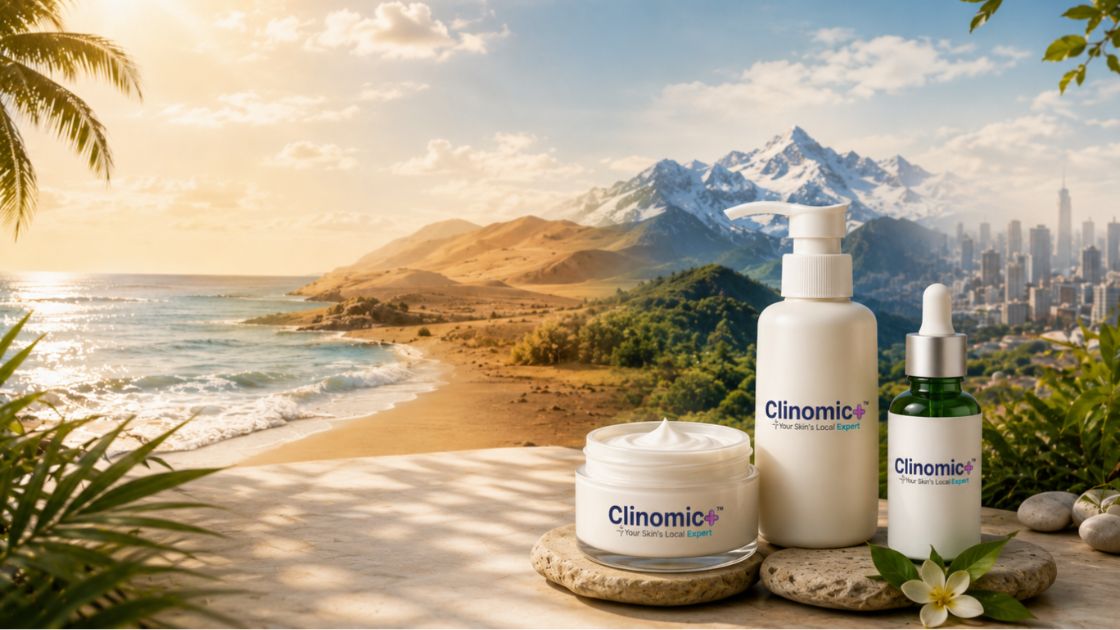
Climate-based skincare focuses on understanding how environmental conditions influence the skin. Instead of treating skincare as universal, this approach recognizes that skin behaves differently in different climates. A product that works perfectly in humid weather may feel greasy in dry regions, while a strong cleanser suitable for hot summers may damage the skin barrier during colder seasons. The environment around you directly impacts how your skin reacts, hydrates, heals, and protects itself.
Why This Matters More in India
India experiences some of the most diverse environmental conditions in the world. Some regions face intense humidity and sweating, while others experience dry heat, cold mountain air, pollution-heavy urban conditions, or extreme seasonal changes. These environments create completely different skin concerns such as dehydration, oil imbalance, clogged pores, irritation, dullness, and weakened skin barriers. Despite these differences, many people still use the same skincare throughout the year without adapting to changing climate conditions.
The Skin Barrier and Environmental Stress
The skin barrier is one of the body’s most important protective systems. It helps retain moisture while defending the skin against pollution, bacteria, UV exposure, and environmental damage. When climate stress becomes too strong, the barrier weakens, leading to dryness, sensitivity, acne, redness, irritation, and inflammation. Many people believe they naturally have problematic skin, but often the real issue is that their skincare routine does not match the environment their skin faces daily.
Why Traditional Skincare Often Fails
Traditional skincare products are often marketed as suitable for all skin types without considering environmental conditions. However, skin is dynamic, not static. It continuously responds to temperature, humidity, sweat, pollution, and seasonal transitions. A moisturizer that feels nourishing during winter may become heavy and pore-clogging during summer. Similarly, a cleanser that feels refreshing in humid weather may become overly harsh in dry climates. This is why many people experience seasonal breakouts, sudden sensitivity, or inconsistent product results.
Climate-Based Skincare Focuses on Adaptation
Climate-based skincare shifts the focus from simply treating skin problems to helping skin adapt better to its environment. Instead of overwhelming the skin with harsh ingredients, this approach prioritizes barrier support, hydration balance, lightweight protection, and environmental defense. Ingredients such as ceramides, niacinamide, antioxidants, hyaluronic acid, panthenol, and microbiome-supporting compounds help strengthen the skin against daily environmental stress.
The Future of Skincare Is Environmental Personalization
Modern skincare is moving toward personalization based not only on skin type but also on environmental conditions and lifestyle factors. Consumers are becoming more aware that climate, pollution exposure, weather patterns, and seasonal transitions play a major role in skin health. The future of skincare is likely to become more adaptive, research-driven, and region-specific, focusing on how real environmental conditions affect real skin concerns.
Final Thoughts
Healthy skin is not determined only by genetics or products. It is also shaped by the environment your skin experiences every day. Climate affects hydration levels, oil production, sensitivity, inflammation, and long-term skin barrier health. That is why skincare should evolve with climate too, because skin performs best when it is supported according to the environment surrounding it.
1 Comment
Great content! Keep up the good work!